How Jacksonville Restaurants Can Fill More Seats Without Spending a Fortune on Advertising

How Jacksonville Restaurants Can Fill More Seats Without Spending a Fortune on Advertising
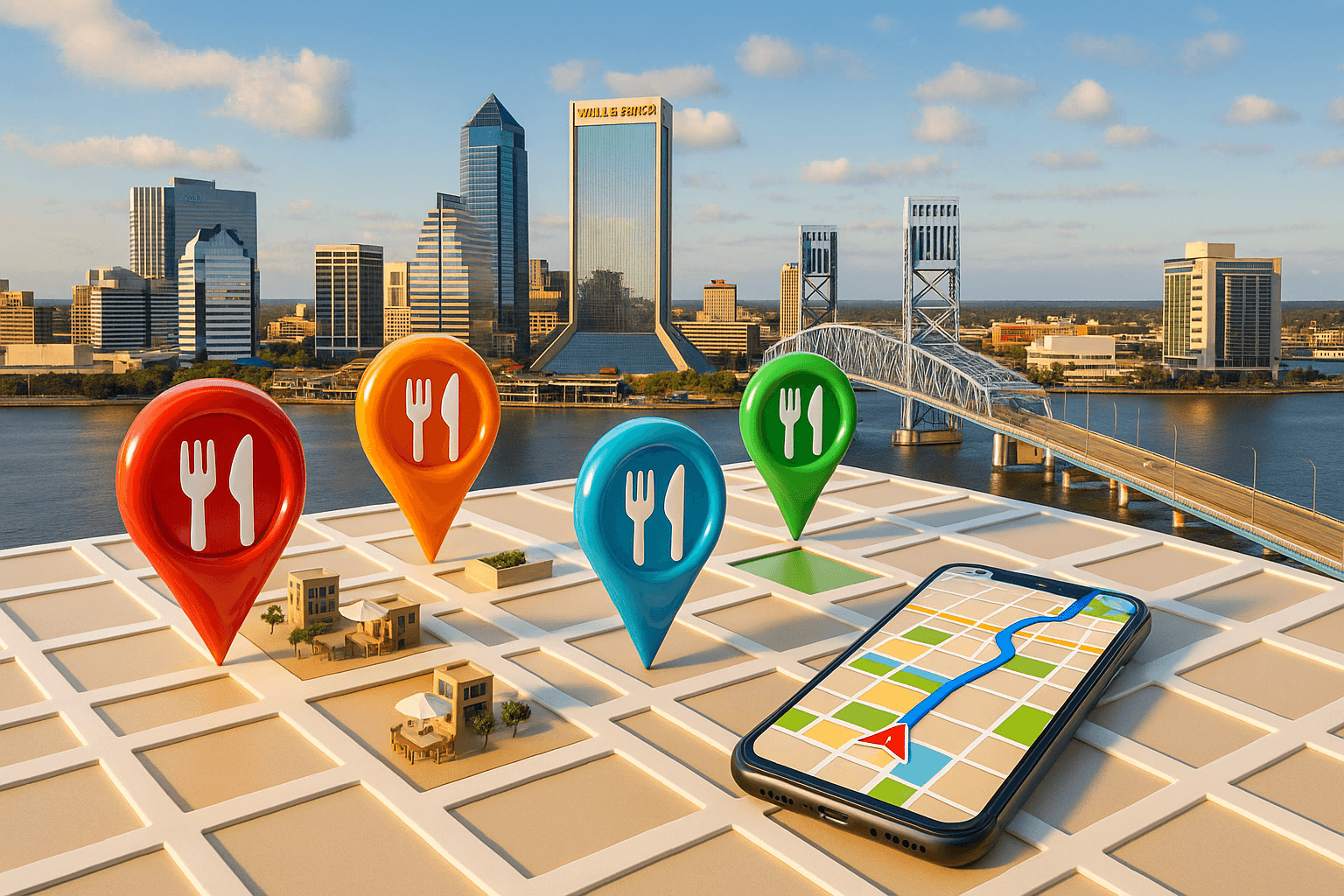
Maria stands behind the host stand at her bistro on Park Street in Riverside, watching six empty tables during what should be peak lunch hour. Across the street, there's a line out the door at the new sandwich place. Same neighborhood. Same lunch crowd. Different result.
She's spent nearly four thousand dollars on Facebook ads this quarter. Her Google Ads account shows hundreds of clicks. But those tables are still empty, and she can't figure out why the money she's pouring into advertising isn't translating into customers walking through her door.
Maria's problem isn't unique. It's playing out right now in San Marco, Five Points, Avondale, and across the Southside. Restaurant owners are bleeding cash on advertising that doesn't work, or worse, advertising that reaches people who will never set foot in their establishment.
The Advertising Trap Most Jacksonville Restaurants Fall Into
According to the National Restaurant Association's 2024 State of the Industry report, restaurants typically allocate between three and six percent of their total revenue to marketing and advertising. For a restaurant doing $800,000 annually, that's $24,000 to $48,000. That's real money.
But here's the problem. Most of that budget gets funneled into channels designed for national brands, not local establishments trying to fill tables on a Tuesday night. A restaurant on Atlantic Boulevard doesn't need someone in Seattle clicking their Google ad. They need the person driving past at 6:45 PM trying to figure out where to grab dinner.
The math gets ugly fast. Google Ads for restaurant-related keywords in competitive markets run between two and five dollars per click. Facebook's organic reach has declined so dramatically that many restaurant pages now reach less than five percent of their followers without paying to boost posts. You're essentially renting visibility, and the landlord keeps raising the rent.
Meanwhile, Jacksonville's restaurant landscape has never been more competitive. The Jacksonville Chamber of Commerce estimates there are over 3,000 restaurants serving a metro population of 1.6 million. That's one restaurant for every 533 people. Bureau of Labor Statistics data shows Duval County employs approximately 45,000 food service workers. It's a big industry with tight margins and fierce competition.
Why Traditional Digital Advertising Fails Restaurants
The fundamental flaw in most restaurant advertising is reach without relevance. A billboard on I-95 near the St. Johns Town Center gets seen by thousands of drivers every day. How many of them are making a dining decision right then? How many will remember your restaurant's name three hours later when they're actually hungry?
Digital platforms promise better targeting, but their definition of "local" is laughably broad for restaurants. Facebook might let you target people within a ten-mile radius. Sounds good until you realize someone in Mandarin isn't driving to Riverside for lunch on a workday. The Toast 2023 Restaurant Technology Report found that 75 percent of diners choose restaurants within five miles of their current location. Five miles, not ten. And more often than not, it's closer than that.
Then there's the timing problem. Someone scrolling Facebook at 10 AM might see your ad, think "that looks good," and completely forget about you by lunch. Search ads are better for intent, but you're competing in an auction against chains with national budgets. A local restaurant bidding against Olive Garden for "Italian restaurant Jacksonville" is bringing a knife to a gunfight.
The result is what Maria experiences: lots of clicks, lots of impressions, lots of money spent, and empty tables.
The Location-Based Alternative: Reaching People Who Are Already Nearby
What if you could reach people when they're already in your neighborhood, already thinking about food, already within walking distance? That's not theoretical. It's happening right now.
Location-based advertising works on a simple premise: the best time to advertise a restaurant is when someone is close enough to eat there in the next thirty minutes. Not when they're browsing their phone at home. Not when they're at work on the other side of town. When they're literally in the area.
This isn't about creepy tracking or privacy invasion. It's about smart geography. Imagine running a restaurant near the St. Johns Town Center. During lunch hours, your ads appear to people who are actually at Town Center right now. Not people who visited last week. Not people who live nearby. People who are there, walking around, figuring out where to eat lunch.
A restaurant on Beach Boulevard during the evening rush can target people sitting in that traffic, already hungry, already out of their house, looking for an easy dinner solution. A San Marco restaurant can reach people strolling the Square on a Friday night, deciding between options.
The power is in the proximity and the timing. You're not interrupting someone's day. You're providing a solution at the exact moment they need it.
How Jacksonville Restaurants Are Making This Work
Let's get specific with some Jacksonville examples of how location-based strategies play out in practice.
Scenario one: Town Center lunch competition. You run a fast-casual restaurant near Town Center. The food court has captive traffic, but you've got better food and better atmosphere. With geo-fencing, you can target people in the Town Center area during lunch hours with a message highlighting what makes you different. Maybe it's a covered patio. Maybe it's a lunch special that's actually filling. Maybe it's the fact that you're not eating in a crowded food court. You're reaching people who are already there, already planning to eat, giving them a reason to walk an extra two minutes.
Scenario two: Beach Boulevard lunch rush. Atlantic and Beach Boulevard see massive lunch traffic from Southside office parks. Workers have thirty to forty-five minutes. They can't drive far. A restaurant on Beach Boulevard with location-based advertising during 11:30 AM to 1:30 PM is reaching people stuck in that corridor, hungry, with limited time. "Quick lunch, great food, no wait" becomes incredibly compelling when you're watching the clock and you're already driving past.
Scenario three: San Marco evening crowd. San Marco has foot traffic, especially Thursday through Saturday evenings. People park once and walk. They're browsing. They're deciding. A restaurant on San Marco Boulevard or Hendricks Avenue can target people who are already in that walkable zone. Your competition isn't every restaurant in Jacksonville. It's the four or five other places they're walking past right now.
The pattern is the same: right place, right time, right message.
The Real Cost Comparison
Let's put some numbers on paper. Here's what different advertising channels actually cost for a Jacksonville restaurant trying to drive foot traffic:
| Advertising Method | Monthly Cost | Estimated Reach | Relevance |
|---|---|---|---|
| Billboard (major intersection) | $2,500 - $5,000 | 50,000+ impressions | Low (most viewers not in buying mode) |
| Google Ads | $1,500 - $3,000 | 600, 1,500 clicks | Medium (high intent, broad geography) |
| Facebook Ads | $1,000 - $2,000 | 20,000, 40,000 impressions | Low to Medium (targeting limitations) |
| Location-Based Advertising | $800 - $1,500 | 5,000, 15,000 nearby users | High (proximity + timing) |
The key difference isn't just cost. It's waste. A billboard might get 50,000 impressions, but how many of those people are potential customers in the next 24 hours? With location-based advertising, nearly everyone you reach is a potential customer right now.
What Smart Jacksonville Restaurant Owners Are Doing Differently
The restaurants that are thriving in Jacksonville's competitive market aren't outspending everyone else. They're outthinking everyone else. They've stopped trying to compete with national chains on brand awareness and started focusing on being the obvious choice when someone nearby is hungry.
That means understanding that restaurant marketing isn't about building a following. It's about being present at the decision moment. The decision moment for restaurants is almost always location-based. Someone is somewhere, they're hungry or they're about to be, and they need to pick a place.
Smart restaurant owners have also figured out that digital advertising platforms built for e-commerce don't work well for businesses that require physical presence. You can't ship a burger. You can't download a dining experience. If someone isn't within a reasonable distance, they're not a customer, and reaching them is waste.
They've also stopped measuring success by impressions and clicks and started measuring by tables filled. An ad campaign that generates 10,000 impressions but fills three tables is worse than a campaign that generates 500 impressions and fills fifteen tables. The math is simple, but the advertising industry has spent decades convincing businesses that impressions matter more than outcomes.
A Jacksonville Solution for Jacksonville Restaurants
Here's where this gets local. WilDi Maps is a Jacksonville-based, veteran-owned location advertising platform designed specifically for local businesses like restaurants. Instead of competing in crowded national ad auctions, restaurants can reach people who are actually nearby when they're most likely to be making a dining decision.
It's built for the reality of how people choose restaurants in Jacksonville, by proximity, by timing, by convenience. And it's built by people who understand this market, this geography, and the challenges local restaurant owners face every day.
The platform focuses on what matters: getting your restaurant in front of people who can actually eat there in the next hour. Not building brand awareness across the metro. Not chasing vanity metrics. Filling tables.
The Bottom Line
Maria's bistro on Park Street doesn't need a bigger advertising budget. She needs a smarter one. She needs to stop paying for clicks from people who will never walk through her door and start reaching people who are already in Riverside, already hungry, already looking for a place to eat.
For Jacksonville restaurants operating on tight margins in a competitive market, every advertising dollar has to work harder. Location-based advertising isn't the only answer, but for restaurants where proximity drives customers, it's often the most efficient answer.
The restaurants filling tables aren't the ones spending the most on advertising. They're the ones spending wisely, reaching the right people at the right time with the right message. And in a city where 3,000 restaurants are competing for attention, being smart beats being loud.
If you're ready to stop wasting money on advertising that doesn't fill tables and start reaching customers who are already nearby, learn more about how location-based advertising works for Jacksonville restaurants.
Tags: Restaurant Marketing, Jacksonville Advertising, Small Business Advertising, Local Business, Location-Based Advertising, Jacksonville Foodies