
The Lunch Break Hack: Driving Hungry Commuters to Your Restaurant in Under 10 Minutes
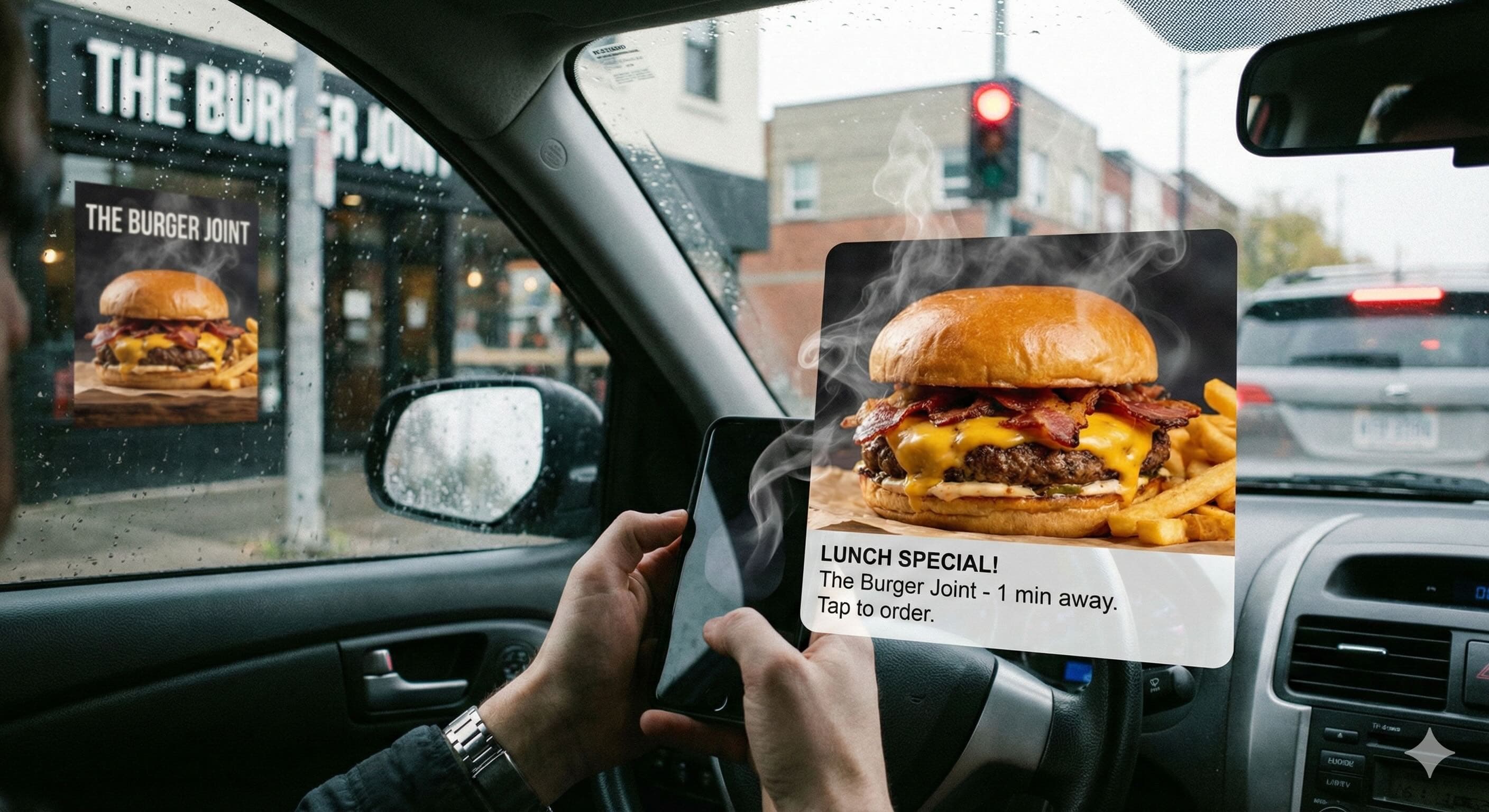
The Lunch Break Hack: Driving Hungry Commuters to Your Restaurant in Under 10 Minutes
Most restaurant owners assume lunch traffic comes from brand awareness. They buy social media ads, post at 11am, or hope their Google listing converts searches into visits. However, this approach often misses the mark when it comes to capturing spontaneous lunch decisions.
According to Toast POS data, restaurants using geo-targeted promotions see 15-25% higher redemption rates compared to blanket coupon campaigns. This suggests that location-based advertising can be significantly more effective, especially in a bustling city like Jacksonville, where traffic patterns and local culture play a major role in consumer behavior.
Traditional advertising cannot reach this moment. A billboard three miles away was seen yesterday. A social post was scrolled past at 9am. By the time a driver is hungry and mobile on major roads like Beach Blvd or Butler Blvd, most marketing has already failed. These roads see significant daily vehicle traffic, with Beach Boulevard alone handling over 45,000 vehicles each day. This creates a prime opportunity for real-time, location-based advertising.
The 10-Minute Decision Window
Statista reports that 68% of consumers make restaurant choices spontaneously. Lunch traffic is not planned. It is immediate. A person decides they are hungry, gets in a car, and drives toward dining hotspots like San Marco or Riverside. Within ten minutes, they select a restaurant based on what interrupts their attention at the right moment.
WilDiMaps, a veteran-owned, Jacksonville-based company, delivers ads to drivers in this exact window using Roadside Reach targeting. The system identifies vehicles traveling through defined corridors near your restaurant during lunch hours. When a phone enters that corridor, the ad is delivered during the decision, not before or after.
How WilDiMaps Works for Jacksonville Restaurants
Traditional location targeting uses broad radius targeting that reaches phones in offices, homes, and highways where your restaurant is not a practical choice. WilDiMaps uses precise corridor targeting.
Here's the 4-step process: (a) Build Your Campaign with our geo-ad builder to target specific roads like Atlantic Blvd or Arlington areas, (b) Drivers See Your Banner in the WilDi app when they enter your chosen corridors, (c) Your ad gets Saved to Inbox for later review, (d) Payment is Confirmed When Parked and you pay only for verified deliveries to actual phones.
This removes waste. A driver six miles away on I-95 will not see your ad. A driver in Mandarin heading away from your Southside location will not see your ad. Only vehicles traveling toward your restaurant within your specified timeframe receive your message.
ROI That Makes Sense
According to BIA Advisory Services, traditional billboard advertising costs restaurants $3,000 to $15,000 per month with no delivery verification. Facebook ads in Jacksonville average $2.50 per click with no guarantee users are nearby or mobile.
WilDiMaps charges per verified delivery to phones in motion near your location. You pay between $0.20 and $0.50 per confirmed ad delivery to devices traveling through your chosen corridors during lunch hours. A restaurant targeting the Five Points and Baymeadows lunch traffic typically spends $340 per month to reach 400 verified devices.
The math is transparent. If 400 delivered ads generate 12 additional lunch visits at a $15 average ticket, your return is $180 revenue per $340 spent before accounting for repeat customers. This is where the flat-rate subscription model of WilDiMaps shines, ensuring no hidden fees or unexpected costs.
Why Geographic Precision Matters
Location matters more for restaurants than any other business. A hungry driver on Butler Blvd cannot practically choose a restaurant in Town Center. Traditional advertising ignores this reality.
WilDiMaps recognizes that lunch decisions happen in motion, within specific geographic constraints, during narrow time windows. The platform delivers your message when physics, hunger, and opportunity align.
Jacksonville's bustling streets, such as Philips Highway and the bustling I-295 corridor with daily vehicle counts of 30,000 to 80,000, are prime locations for intercepting these hungry drivers. Your restaurant needs customers who are hungry, mobile, and nearby right now—not customers who might remember your brand next week.
Ready to capture the 10-minute lunch window? Talk to a Campaign Specialist about targeting lunch traffic on your specific Jacksonville corridors and take advantage of WilDiMaps' effective, flat-rate subscription model.