
Wait, People Still Look at Billboards? The Data-Backed Case for Mobile Geo-Fencing
Wait, People Still Look at Billboards? The Data-Backed Case for Mobile Geo-Fencing
The Billboard Attribution Problem
Billboard advertising operates on faith. Drivers speeding past at 55 mph supposedly see your message and act later. According to the Outdoor Advertising Association, billboards generate 82% recall rates, but recall isn't conversion. A driver may remember seeing a sign without knowing where or when, making attribution impossible.
Traditional out-of-home advertising costs $2 to $7 per thousand impressions, but those impressions aren't verified. A billboard on I-95 through Jacksonville generates estimated traffic counts, not logged views. Payment relies on traffic models, not delivery confirmation.
This creates measurement gaps. Did 10,000 people drive past or 8,000? Were they local Jacksonville residents or highway travelers? Did they notice the sign or focus on merging traffic? Advertisers pay the same rate regardless.
How WilDiMaps Replaces Estimation With Verification
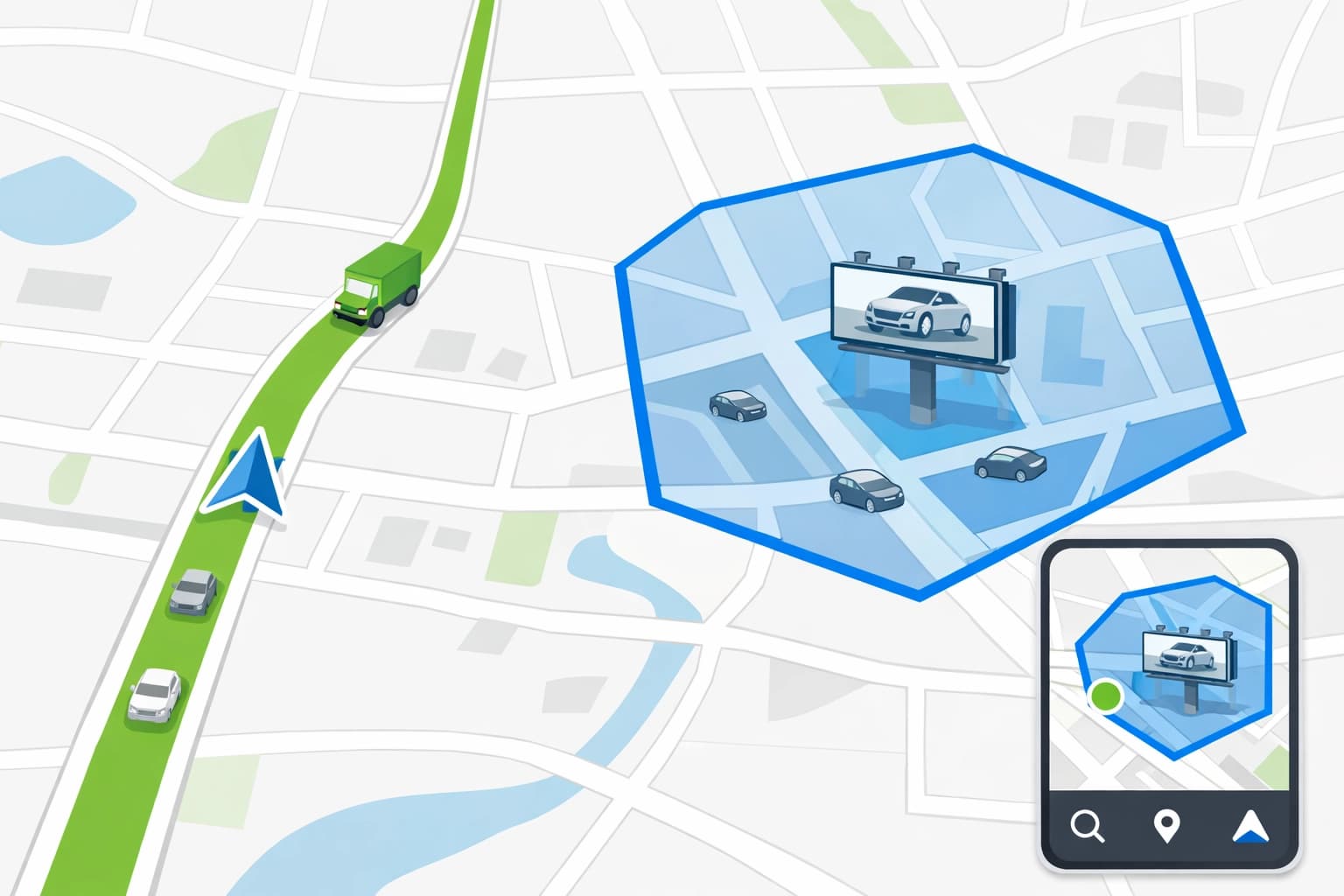
Mobile geo-fencing inverts the billboard model. Instead of placing static messages in high-traffic areas hoping the right people see them, WilDiMaps, a veteran-owned, Jacksonville-based company, delivers ads to devices entering defined boundaries. Every delivery is logged, location verified, and attribution tracked.
WilDiMaps uses GPS-verified stop detection for ad delivery. Vehicles must stop completely within target zones for ads to register as delivered. This eliminates highway pass-throughs and drivers moving too fast to engage. No charges for impressions outside boundaries or during motion.
Our Neighborhood Reach campaigns target specific corridors around your location. Define one mile around your Southside restaurant, the San Marco shopping district, or even competitor parking lots. The platform logs each qualifying stop and maps customer journeys.
Affordable Pricing Model
WilDiMaps offers an affordable monthly flat-rate subscription, ensuring that businesses can plan their advertising budgets without surprises. The cost of verified deliveries ranges from $0.20 to $0.50 each. There are no impression costs and no hidden fees involved. This transparent pricing model makes it easier for businesses to understand their marketing spend.
How WilDiMaps Works
The process delivers verified results through four steps:
- Build Your Campaign with our geo-ad builder targeting specific Jacksonville areas like Beach Blvd or Butler Blvd.
- Drivers See Your Banner in the WilDi app when they enter your defined zone.
- Saved to Inbox for later review when drivers have time to engage.
- Confirmed When Parked and you pay only for verified deliveries.
Verified ROI vs Traditional Advertising
Think with Google research shows location-based mobile ads generate 2.7x higher conversion rates than standard display advertising. WilDiMaps' cost-per-verified-delivery averages between $0.20 and $0.50, making it more cost-effective than Facebook's $1.72 cost-per-click or billboard CPMs that can't track actual engagement.
Burger King's geo-fencing campaign targeting McDonald's locations generated 1.5 million app installs in nine days and 500,000 Whopper redemptions. Attribution was clear because delivery boundaries matched conversion locations.
Jacksonville's Unique Opportunity
In Jacksonville, with its diverse neighborhoods and bustling commercial districts, geo-fencing offers unique opportunities. Areas like Riverside, with its 25,000 daily vehicle traffic, or the St. Johns Town Center, seeing over 50,000 vehicles daily, present prime locations for targeted advertising. WilDiMaps allows local businesses to tap into these high-traffic areas with precision.
For instance, a coffee shop in Avondale can target morning commuters, while a boutique in the historic Springfield area can focus on weekend shoppers. This level of targeting is unmatched by traditional billboards.
What Geo-Fencing Cannot Replace
Geo-fencing isn't perfect for every goal. Brand awareness campaigns benefit from billboard visibility to thousands of daily commuters. Creative storytelling works better in video formats. Immediate impulse purchases suit point-of-sale displays.
However, for local businesses targeting nearby customers, geo-fencing provides measurable attribution that billboards cannot match. According to BIA Advisory Services, location-based advertising spending will reach $38.7 billion by 2026, driven by demand for accountable local marketing.
WilDiMaps turns location into competitive advantage. Target Five Points restaurant visitors, Baymeadows shoppers, or Riverside residents with verified delivery confirmation and trackable customer journeys.
Ready to transform your advertising strategy? Visit wildimaps.com and talk to a Campaign Specialist about replacing estimated impressions with verified customer connections.